Titanium Court Arrives: First Look at the Surreal Strategy Hybrid That Just Won the IGF Grand Prize (April 2026)
The embargo on Titanium Court has just lifted — AP Thomson's genre-bending match-3 tower-defense roguelite launches April 23 on Steam, arriving with the IGF Grand Prize and Excellence in Design award already in its trophy case. Here's Primvo's first editorial breakdown of what makes this one of 2026's most essential indie strategy games.
Updated 96 days ago. Server notices can affect logins, matchmaking, downloads, store access, and party systems.
Wishlist Titanium Court on Steam and play the free 97% Very Positive demo before launch.
The Embargo Is Lifted — And Titanium Court Is Already 2026's Indie Darling
After months of controlled press access, the Titanium Court review embargo has finally lifted. AP Thomson's surreal, genre-defying strategy game is launching on Steam April 23, 2026 via publisher Fellow Traveller — and it's doing so with a trophy case most indies would kill for.
At the 2026 Independent Games Festival, Titanium Court didn't just earn a nomination. It won the Seumas McNally Grand Prize — the IGF's top honor — alongside the Excellence in Design award, with nominations in four total categories. That kind of pre-launch recognition is rare. The last comparable run was Stray in 2022 and Inscryption before it. The pattern those games share is simple: they rewired how their genres work. Titanium Court is poised to do the same.
This is our first editorial breakdown of what makes the game stand out, why the genre blend actually works, and who should be paying attention on launch day.
What Is Titanium Court, Actually?
Here's the sentence that took the press kit itself three paragraphs to land on:
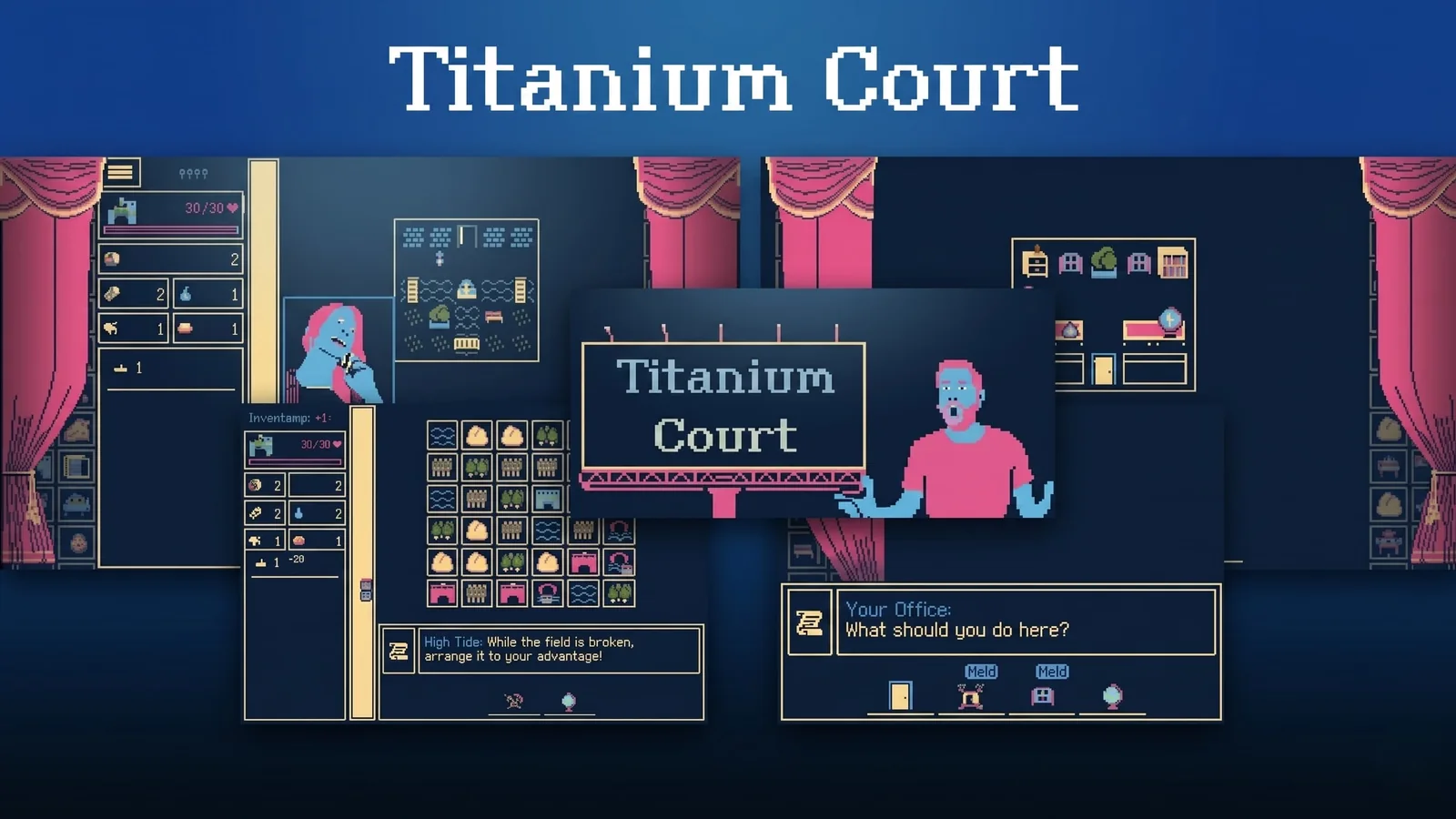
Titanium Court is a match-3 tower-defense roguelite with RPG and auto-battler elements, set inside a surreal faerie realm where you command terrain — not troops — to survive.
That reads like genre soup until you see it work. On paper the systems shouldn't cohere. In execution, they lock together into one of the most satisfying strategy loops shipped this year.
The Genre Stack
Each layer adds something the layer below lacks:
- Match-3 puzzle — the tactile, addictive core loop.
- Tower defense — the stakes and spatial thinking.
- Roguelite run structure — the variety and replay.
- RPG progression — the long-term identity shaping.
- Auto-battler — the "sit back and watch it work" dopamine.
Most "genre blend" indie games pick two. Titanium Court picks all five and — according to every critic who's played it so far — makes them feel like they were always meant to be together.
Core Gameplay — The High Tide / Low Tide Loop
A Titanium Court run consists of seven battles. Each battle alternates between two distinct phases:
High Tide — The Puzzle Phase
You match terrain tiles on a board to earn resources and reshape the battlefield. The twist: you're not matching for points. You're matching to physically redesign the map that enemies will cross in the next phase. Match mountains near your Court and enemies slow down. Match water tiles along the approach and create chokepoints. The match-3 isn't decoration — it's terrain engineering.
You play until you run out of moves. Efficiency matters.
Low Tide — The Tower Defense Phase
You spend the resources earned in High Tide to deploy units, cast spells, and build structures. Then battle commences. You don't issue orders to your faerie troops — they won't follow them anyway. Your leverage is the terrain you just built and the structures you just placed. Then you watch your decisions play out.
The Seven-Battle Arc
One completed run = seven battles of escalating difficulty. Between battles, you encounter story moments, draft upgrades, and make decisions that shape your Court permanently. Some of these decisions "fundamentally change you as a person" according to the developer — a nod to the meta-narrative system that ties runs together across playthroughs.
Visual Design — Surreal, Not Random
Titanium Court looks unlike anything else in the 2026 strategy lineup. The art direction sits at the intersection of:
- Vaudevillian theatre — curtains, stagehands, performative framing.
- Early-1900s illustrated fairy-tale books — hand-drawn linework, muted palette.
- Modernist absurdism — giant mice, clown courts, interactive showers.
- Baseball iconography — yes, really. It's a recurring motif.
The result is a game that feels deliberately unhinged but never chaotic. Every weird choice serves the writing, which is where Titanium Court's IGF Excellence in Design award actually comes from. The tone is Kurt Vonnegut through a match-3 board — dryly funny, philosophically loaded, and structurally confident in its own strangeness.
The Writing — And The Warning
This needs to be said upfront: Titanium Court features a hefty amount of reading. The developer literally calls it out on the Steam page.
This is a game that rewards close attention to dialogue. Characters speak freely — and almost never explain anything literally. You'll be learning the Court's systems and lore through implication, misdirection, and outright Vaudevillian joke structure. For players who loved the writing in Disco Elysium, Pentiment, or Thomson's previous game Consume Me, this is exactly the experience you've been missing.
For players who skim text in RPGs, you'll still enjoy the mechanical loop — but you'll miss 60% of what makes Titanium Court special.
The Demo Pedigree — 97% Positive, 148 Reviews
The free Titanium Court demo launched on Steam Next Fest (February 17, 2026) and never left. As of the embargo lift, it sits at Very Positive: 97% of 148 reviews, with recent reviews holding at 100% positive on 15 reviews.
Demos rarely hold that rating at those review counts. It's one of the cleanest demo receptions of 2026 and directly fed into the game's "Best of Next Fest" placements across multiple outlets — which in turn built the momentum that carried it through the IGF awards season.
If you're on the fence at launch, the demo is still live on Steam. Play it first. You'll know in the first 20 minutes whether this game is for you.
Who Titanium Court Is For
This is the perfect pickup if you enjoy:
- Slay the Spire / Monster Train — roguelite run structure with deep systems.
- Into the Breach — puzzle-perfect tactical depth with permanent consequences.
- Disco Elysium / Pentiment — text-heavy narrative with distinct voice.
- Bejeweled / Candy Crush evolved into something brain-burning.
- PlateUp! / Dome Keeper — genre-blending indies with strong design identity.
This is probably not for you if:
- You skip dialogue boxes.
- You prefer action over systems.
- You bounce off abstract art direction.
Target Audience — PC Strategy Veterans And Narrative Game Fans
Titanium Court is squarely aimed at the PC strategy enthusiast with a narrative tolerance — the same intersection that made Slay the Spire, Into the Breach, and Cultist Simulator sleeper hits. It's not a mass-market casual puzzle game despite the match-3 framing.
The play time listed in the official press kit is 6 to 30 hours — which is Thomson being honest. A single complete run is short. A "finished" playthrough, where you've genuinely understood the Court, its characters, and its systems, is long. This is a game you finish multiple times.
Platforms: PC (Windows + macOS) at launch. No console port announced yet.
Early Verdict — Yes, Pay Attention
Titanium Court is exactly the kind of game that defines a year for indie strategy. It has the awards (IGF Grand Prize, Excellence in Design), the demo reception (97% Very Positive), the developer pedigree (AP Thomson's Consume Me and Fortune-499 are cult touchstones), and the publisher (Fellow Traveller's resume includes Citizen Sleeper, In Other Waters, and The Stanley Parable: Ultra Deluxe).
The combination of those four things happening at once is how genre-defining games announce themselves.
If you play strategy games, play roguelites, or play narrative indies — Titanium Court belongs on your wishlist today. If you've been burned by "genre blend" pitches before, that's fair — this is the rare one where the blend isn't a gimmick, it's the entire point. The match-3 matters to the tower defense. The tower defense matters to the roguelite. The roguelite matters to the narrative. Everything compounds.
We'll have a full review closer to launch once we've run the complete seven-battle arc across multiple playthroughs. But the embargo lift answer to the question "should PC gamers care about Titanium Court on April 23?" is unambiguous:
Yes. Put it on your wishlist. Play the demo tonight. Then be ready on launch day.
Titanium Court — Key Facts
| Detail | Confirmed |
|---|---|
| Release Date | April 23, 2026 |
| Developer | AP Thomson (New York, US) |
| Publisher | Fellow Traveller |
| Platforms | PC (Steam — Windows + macOS) |
| Play Time | 6–30 hours |
| Players | Single-player |
| Language | English (full audio + subtitles) |
| Awards | IGF 2026 Seumas McNally Grand Prize + Excellence in Design |
| Demo Rating | 97% Very Positive (148 reviews) |
Wishlist & Play The Demo On Steam
The Titanium Court Steam page is live with the full free demo, trailer, screenshots, and awards showcase. If you want to lock in day-one access and support a small indie developer with a genuinely remarkable debut, the wishlist push matters for launch-day visibility.
🎯 View Titanium Court on Steam →
Launch day is April 23. We'll be back with a full review shortly after.
Recommended paths
Recommended next steps
Continue with useful related pages selected for this article.
Titanium Court — Official Steam Page
Wishlist Titanium Court on Steam and play the free 97% Very Positive demo before launch.
App Game Kit: Easy Game Development game hub
Continue into the Game Updates game hub for related coverage, deals, and fixes.
Prime Monster Out Now: The Political Roguelike Drops on Steam
Continue with a related related selected from Primvo's connected coverage.
War Thunder Server Maintenance Notice (June 9th): What Players Should Check Before Changing Settings
Continue with a related related selected from Primvo's connected coverage.
Check whether your PC is ready for App Game Kit: Easy Game Development
Compare your setup with available PC requirements before you install, buy, or upgrade.
Wax Heads Review: The Cozy Record Store Sim That Celebrates Music Culture
Continue with a related guide selected from Primvo's connected coverage.
App Game Kit: Easy Game Development updates and patch notes
Use the patch notes hub to follow recent updates, hotfixes, and game changes.
Continue Exploring
Choose another useful Primvo section when you want more context, deals, guides, or game pages.
Error Code Checker
Look up connection, crash, launcher, console, and multiplayer error codes.
Server Status
Check common service issues before changing settings or reinstalling a game.
Titanium Court
Continue through related games and connected player pages.
Guides
Keep reading with useful walkthroughs, settings help, and fixes.
Related Games
View all games
App Game Kit: Easy Game Development
App Game Kit: Easy Game Development update hub with patch notes, PC requirements, deal paths, and player tools.

EVE Online
EVE Online update hub with patch notes, PC requirements, deal paths, and player tools.

Escape from Tarkov
Escape from Tarkov update hub with patch notes, PC requirements, deal paths, and player tools.

Raji: An Ancient Epic
Raji: An Ancient Epic update hub with patch notes, PC requirements, deal paths, and player tools.
Keep Reading
Open everything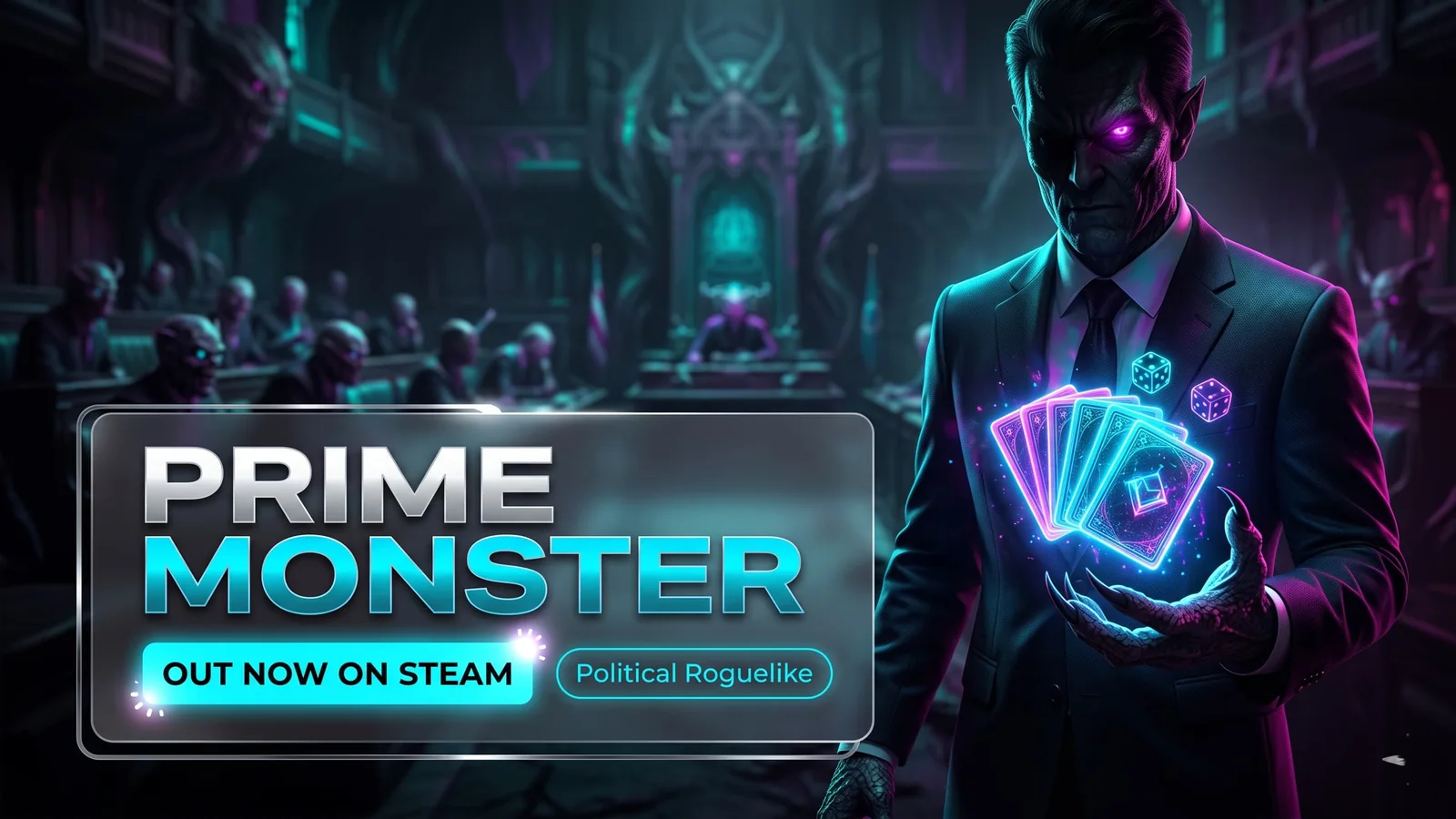
Prime Monster Out Now: The Political Roguelike Drops on Steam
Prime Monster has launched on Steam, giving strategy fans a strange new political roguelike where cards, scandals, monsters, and power plays decide who survives parliament.

Wax Heads Review: The Cozy Record Store Sim That Celebrates Music Culture
Wax Heads turns a struggling record store into a warm, music-driven sim where customer recommendations, vinyl culture, and community stories matter.

War Thunder Server Maintenance Notice (June 9th): What Players Should Check Before Changing Settings
War Thunder players may be affected by a fresh service update. Here is what to check first, what could be affected, and when to wait before changing settings.

Apex Legends Matchmaking Tests Update: What Players Should Check Before Changing Settings
Apex Legends players may be affected by a fresh service update. Here is what to check first, what could be affected, and when to wait before changing settings.