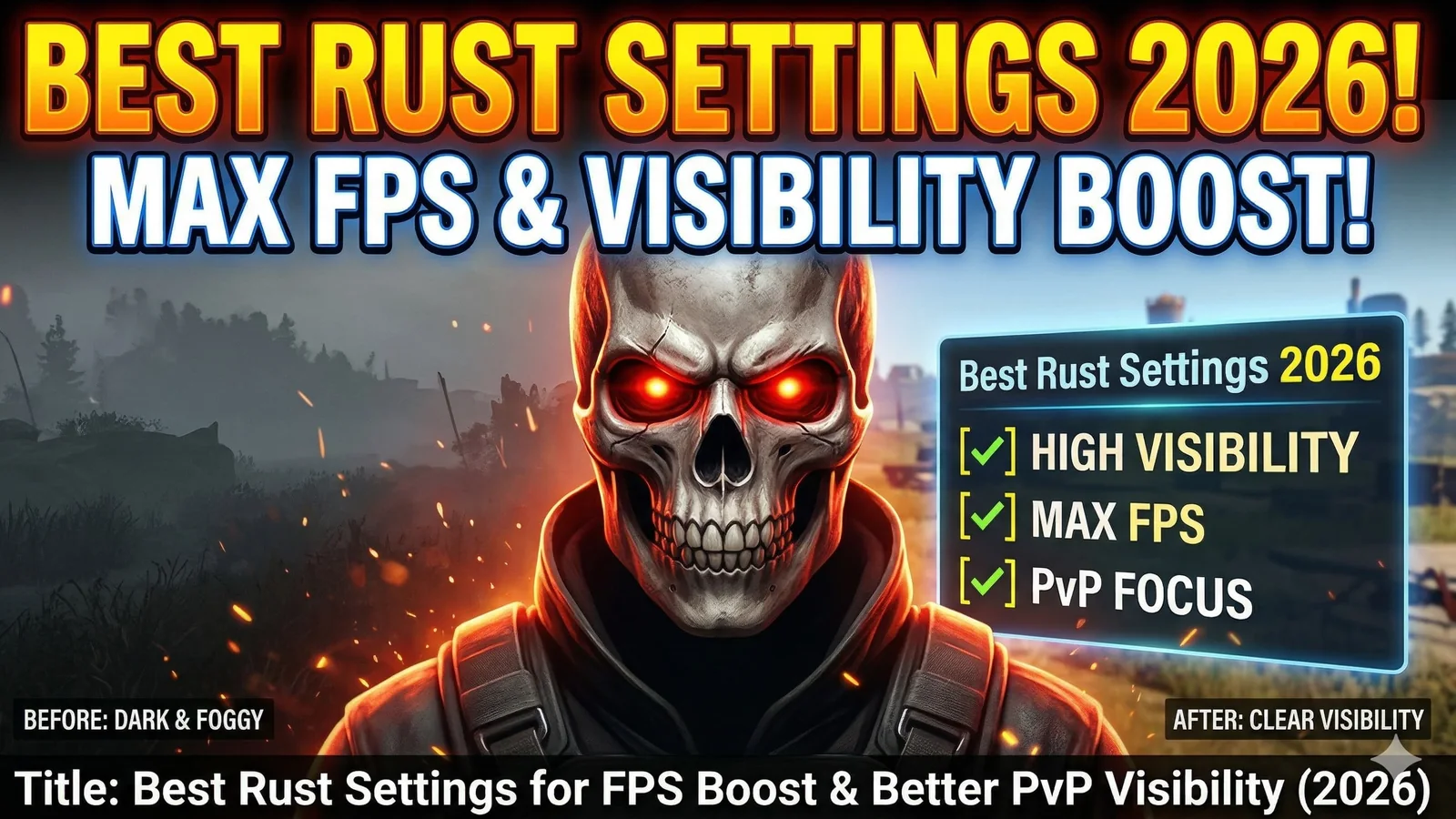
Best Rust Settings for FPS Boost & Better PvP Visibility (2026)
Looking for the best Rust settings for smoother FPS and better PvP visibility? Here’s a clean setup guide to improve performance, reduce lag, and make fights feel more stable.
Updated 69 days ago. Server notices can affect logins, matchmaking, downloads, store access, and party systems.
What happened
Rust is still one of the strongest games for performance-focused players because smooth gameplay matters a lot more here than in many other titles.
If your FPS drops, your fights feel worse. If your visibility is weak, spotting enemies gets harder. If your game stutters, even simple PvP moments become frustrating.
That is why so many players keep searching for the best Rust settings, low-end optimization tips, visibility improvements, and easy ways to make the game feel more stable.
This guide is built to help with exactly that.
Why this matters
In Rust, better settings do more than improve how the game looks.
They can help you:
- react faster in fights
- spot movement more clearly
- reduce input delay
- keep performance more stable in busy areas
- make PvP feel less inconsistent
For many players, the biggest upgrade is not changing hardware right away. It is cleaning up the in-game setup first and making sure the game is tuned for smoother performance.
Best Rust settings for smoother FPS
The best Rust settings for performance usually aim for one goal: stable frames over visual clutter.
A good setup should help you keep the game readable without loading your system with effects that do not help in real fights.
When adjusting Rust for better FPS, focus on:
- lowering heavy visual effects
- reducing unnecessary background detail
- keeping the image clean and readable
- avoiding settings that create extra noise during movement
- prioritizing stability over maximum graphics quality
The goal is not to make Rust look bad. The goal is to make it feel cleaner, faster, and easier to play.
Best settings for PvP visibility
Visibility matters because Rust fights often depend on fast recognition.
You want settings that make it easier to:
- detect movement
- read terrain clearly
- avoid visual clutter
- keep distant targets easier to notice
- stay comfortable during longer sessions
The best PvP setup is usually the one that gives you a clear image without distracting effects or extra softness.
A lot of players make the mistake of chasing “best graphics” instead of “best readability.” For PvP, readability wins.
How to reduce lag and stutter in Rust
If Rust feels unstable, start with the basics first.
A cleaner setup often comes from:
- lowering demanding visual options
- reducing background system load
- closing unnecessary apps
- checking that your storage and system are not overloaded
- staying with a stable setup instead of changing settings every few minutes
Small changes can have a bigger impact than most players expect, especially if your system is mid-range or older.
Best approach for low-end PCs
If you play Rust on a lower-end PC, the smartest move is not trying to copy a high-end setup.
Instead, build around three priorities:
- stable frame rate
- clean visibility
- low input friction
That means making choices that help the game stay responsive first. Once the game feels stable, you can slowly increase the settings that do not hurt performance too much.
Common mistakes players make
A lot of Rust players slow themselves down with the same mistakes:
- keeping visuals too high for their hardware
- changing too many settings at once
- ignoring background performance problems
- focusing only on looks instead of visibility
- expecting one “magic” setting to fix everything
The best setup usually comes from small, smart adjustments that work well together.
What to do after improving your settings
Once your Rust settings feel stable, your next step should be simple:
- test your performance in a real session
- check whether fights feel clearer
- see if your visibility improved
- keep the setup that feels consistent
- return to your main Rust hub for broader progression and support content
That helps you turn a settings guide into a practical long-term setup instead of a one-time guess.
Important note
This guide focuses only on legal settings changes, clean optimization advice, and smoother gameplay setup.
No cheats, no scripts, and no exploits.
FAQ
What are the best Rust settings for FPS?
The best Rust settings for FPS are usually the ones that reduce heavy visual load and keep gameplay stable and readable.
What matters more in Rust: graphics or visibility?
For most players, visibility and stable performance matter more than maximum graphics quality.
Can better settings help in PvP?
Yes. Better settings can improve readability, reaction comfort, and overall fight consistency.
What should low-end PC players focus on first?
Stable FPS, cleaner visibility, and lower system load should come first.
Will this page be updated?
Yes. This guide is designed to support future Rust settings and performance updates.
Related paths
Recommended paths
Recommended next steps
Continue with useful related pages selected for this article.
Lost Ark game hub
Continue into the RPG game hub for related coverage, deals, and fixes.
Check whether your PC is ready for Lost Ark
Compare your setup with available PC requirements before you install, buy, or upgrade.
Steam Deck vs gaming laptop
Compare portable PC gaming options before choosing a handheld, laptop, or setup upgrade.
RTX 3060 vs RTX 4060 for gaming
Compare game fit, features, power efficiency, and total upgrade cost before changing GPUs.
8GB vs 16GB RAM for gaming
Compare memory headroom, background apps, mods, and target-game requirements.
Low-end PC vs cloud gaming
Compare local hardware limits with streamed gaming, connection quality, and subscription access.
Upgrade Path Calculator
Compare practical upgrade paths for smoother gameplay, storage, memory, or GPU limits.
Continue Exploring
Choose another useful Primvo section when you want more context, deals, guides, or game pages.
Error Code Checker
Look up connection, crash, launcher, console, and multiplayer error codes.
Server Status
Check common service issues before changing settings or reinstalling a game.
rust
Continue through related games and connected player pages.
Guides
Keep reading with useful walkthroughs, settings help, and fixes.
Related Games
View all games
Keep Reading
Open everything
War Thunder Server Maintenance Notice (June 9th): What Players Should Check Before Changing Settings
War Thunder players may be affected by a fresh service update. Here is what to check first, what could be affected, and when to wait before changing settings.
Apex Legends Matchmaking Tests Update: What Players Should Check Before Changing Settings
Apex Legends players may be affected by a fresh service update. Here is what to check first, what could be affected, and when to wait before changing settings.